Capybara
Common name: Capybara
Scientific name: Hydrochoerus hydrochaeris
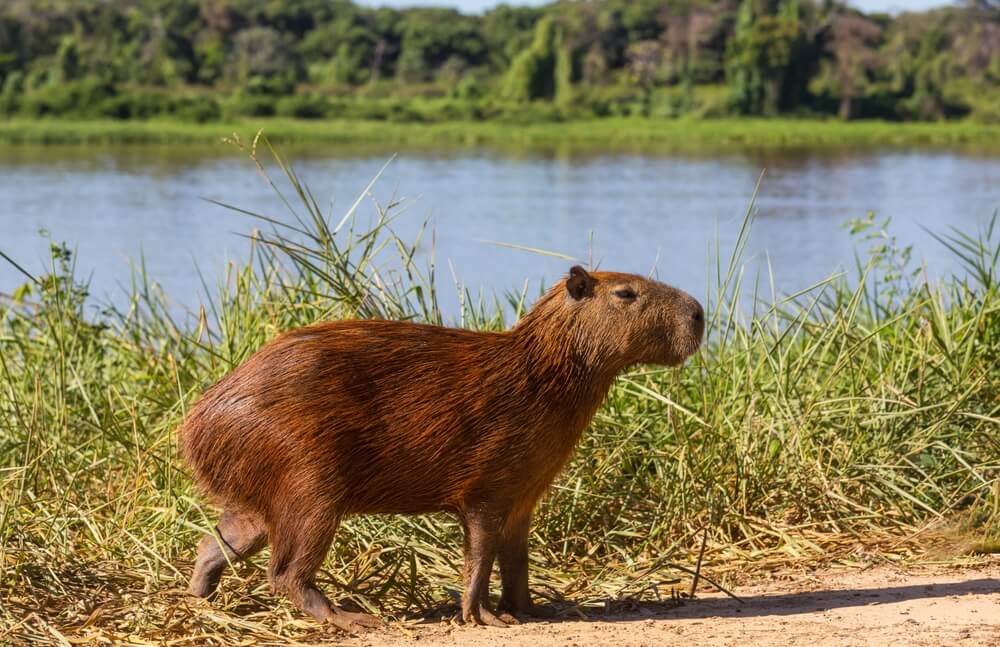
The capybara (Hydrochoerus hydrochaeris) is the world’s largest living rodent. Native to South America, these highly social mammals spend much of their time close to water, where they swim, rest and escape from predators.
Perfectly adapted to a semi-aquatic lifestyle, capybaras have slightly webbed toes that make them excellent swimmers. Their eyes, ears and nostrils are positioned high on their heads, allowing them to stay almost completely submerged while remaining aware of their surroundings. They can even remain underwater for several minutes when avoiding danger.
Capybaras live in family groups that can range from a handful of individuals to much larger gatherings where food and water are plentiful. They communicate using a variety of whistles, barks, clicks and purrs, helping group members stay in contact and warn one another of potential threats. Although often seen relaxing, they are strong runners and agile swimmers when they need to escape predators.
Fast Facts
-
Status
Least Concern
-
Weight
35-75kg
-
Gestation
Around 5 months
-
Number of young
Typically 2-8
-
Lifespan
Up to 10 years


In the wild
Capybaras are found throughout much of South America, east of the Andes, including countries such as Brazil, Venezuela, Colombia, Paraguay, Uruguay and northern Argentina. They are always found close to water, living in habitats such as marshes, wetlands, estuaries, rivers and streams. They spend a lot of their time swimming, resting and feeding near the water’s edge, using it to cool down and escape from predators.
These highly social animals usually live in family groups of between 2 and 30 individuals, led by a dominant male, although they may sometimes be seen alone where hunting pressure is high. In some parts of their range they are most active during the day, while in areas where they are disturbed by people they often become more active at night.
Females can breed throughout the year, giving birth after a gestation of around four to five months. Litters can range from two to eight. Young capybaras are born fully furred, with their eyes open, and are able to follow the group and begin grazing within just a few days. The whole group helps protect and watch over the young. Water plays an important role throughout their lives, providing safety, helping regulate body temperature and offering a refuge from predators
Grasses make up the majority of a capybara’s diet, although they also eat aquatic plants, reeds and other vegetation. They often graze during the cooler parts of the day and spend the hottest hours resting in water to keep cool. Their specialised digestive system allows them to efficiently process tough plant material.
Capybaras are prey for a variety of animals across South America, including jaguars, pumas, caimans and green anacondas. Young capybaras are particularly vulnerable to predators, but living close to water gives them a valuable escape route. They are strong swimmers and can dive underwater to avoid danger, while their social groups help keep watch for approaching threats.
Although capybaras are currently listed as Least Concern on the IUCN Red List due to their wide distribution and large population, they still face pressures in parts of their range. The loss and damage to wetlands through agriculture, development and changes to natural water systems can reduce the habitat they rely on, while hunting for meat and hides also affects some local populations. Protecting healthy wetland habitats is essential to ensure capybaras continue to thrive in the wild.