Action Indonesia Day: Meet Marwell’s banteng and anoa
August 9, 2026

August 9, 2026
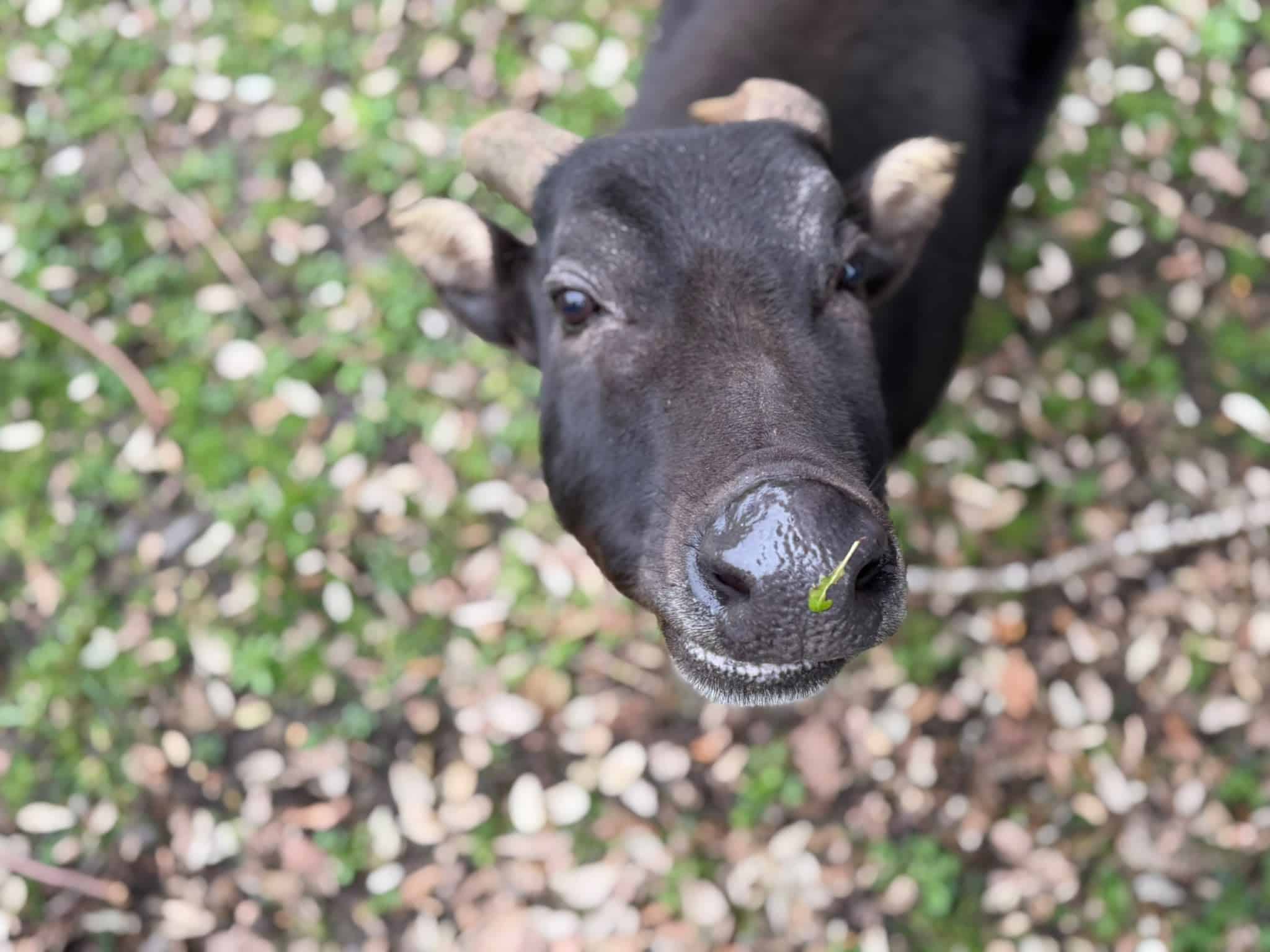
From the world’s smallest wild cattle to one of Southeast Asia’s most distinctive species, some remarkable animals at Marwell Zoo have connections to Indonesia.
Action Indonesia Day works to raise awareness and support conservation of four threatened species: anoa, banteng, babirusa and Sumatran tigers.
Here at Marwell, we care for two of these species – lowland anoa and banteng – giving our guests the opportunity to discover animals they may otherwise know very little about.
And this year, Action Indonesia Day is particularly well timed, as our male lowland anoa, Sparky, celebrates his 26th birthday!
Small cattle with a big role
Lowland anoa are the smallest wild cattle species in the world and are found only on the Indonesian islands of Sulawesi and Buton.
Despite their small stature, they have an important role within their rainforest ecosystem. Alongside banteng, their grazing and movement through their environment can help maintain vegetation and disperse seeds.
Banteng are a larger wild cattle species found across parts of Southeast Asia and are particularly recognisable by the distinctive white markings on their lower legs.
Both species are under considerable pressure. Lowland anoa are classified as Endangered, while banteng are Critically Endangered, with habitat loss and hunting among the threats contributing to their decline.
Protecting species like these can also have benefits far beyond the animals themselves. Conserving their habitats helps protect the many other plants and animals that share the same ecosystems.
Are anoa really the ‘demons of the forest’?
It might not sound like a nickname for one of our quieter residents, but anoa have sometimes been referred to as the ‘demons of the forest’.
Keeper Katie Webb explains that this is linked to local beliefs that anoa emerge from the forest at night and attack livestock. In reality, anoa are generally shy and reclusive animals that spend much of their time amongst dense vegetation.
Misconceptions and negative perceptions of wildlife can contribute to conflict between people and animals, making understanding and awareness an important part of conservation.
There are actually two species of anoa – lowland anoa and mountain anoa. They inhabit similar geographical areas but at different altitudes, with mountain anoa being smaller and having a thicker coat.
And anyone expecting a ‘demon of the forest’ when they meet Sparky at Marwell may be in for a surprise.
“Sparky is a very easy-going animal that loves to spend most of his day browsing and lying in bed.”
– Katie Webb, Animal Keeper


Sparky turns 26
At 26 years old, Sparky is a geriatric anoa, and Katie and the team have noticed some natural changes as he has grown older.
He has slowed down and spends more of his day resting, while a few ‘salt-and-pepper’ hairs have started appearing around his muzzle and eyes.
But that doesn’t mean he has lost his enthusiasm for his favourite things.
Fresh browse and a new bark pile can still inspire a sprint across his habitat and what Katie describes as a “happy tail”. His age doesn’t stop him standing on his back legs to reach leaves from the oak trees in his habitat either.
For Katie, the relationship she has developed with Sparky through caring for him makes those quieter moments particularly special.
“Sparky is very much the animal I would go to if I needed a minute of calm.”
She added: “When you check on him throughout the day, he is a very good reminder of why I enjoy my job and actually how cool it is to be able to look after and help support the conservation of this small buffalo species native to a country across the world, where it means so much to its ecosystem.”

A ‘silly five minutes’ with our banteng
Sparky isn’t the only Action Indonesia species you can discover at Marwell.
Katie also helps care for our banteng, and one of her favourite moments is watching the group head outside and make the most of their paddock – particularly after wet weather.
“They always have so much energy and love to kick their legs out and throw their heads around.”
Katie describes it as their “silly five minutes” – a burst of activity she particularly enjoys seeing after they have chosen to spend most of a rainy day indoors.
Behind moments like these is the team’s everyday care.
A typical day includes checking the health and wellbeing of each animal, preparing and providing food, caring for their habitats and offering a positive life experience, with the team adapting their approach to the individual animals and their changing needs.
Why caring for anoa and banteng matters
Anoa and banteng may not have the instant recognition of a Sumatran tiger, but that’s one of the reasons days like Action Indonesia Day are so valuable.
As Katie puts it:
“To the average person these might look like just another cow, but giving people the chance to see these animals, learn about them and ask keepers questions allows people to understand them – and maybe even make an effort to support these species in the wild.”
Alongside conservation work taking place in Indonesia, carefully coordinated conservation breeding programmes help maintain healthy and genetically diverse populations of threatened species in human care.
Raising awareness matters too. By introducing people to lesser-known species such as anoa and banteng, we can help more people understand why they matter, the threats they face and the importance of protecting the ecosystems they are part of.
So, next time you visit Marwell, take a little extra time to seek out our anoa near Marwell Hall and banteng herd at the back of the Tropical House and discover two incredible wild cattle species you might not have known much about before.
And if you spot Sparky enjoying a well-earned rest, make sure you wish him a very happy 26th birthday.